Hood’s Texas Brigade
By Harry Zhang
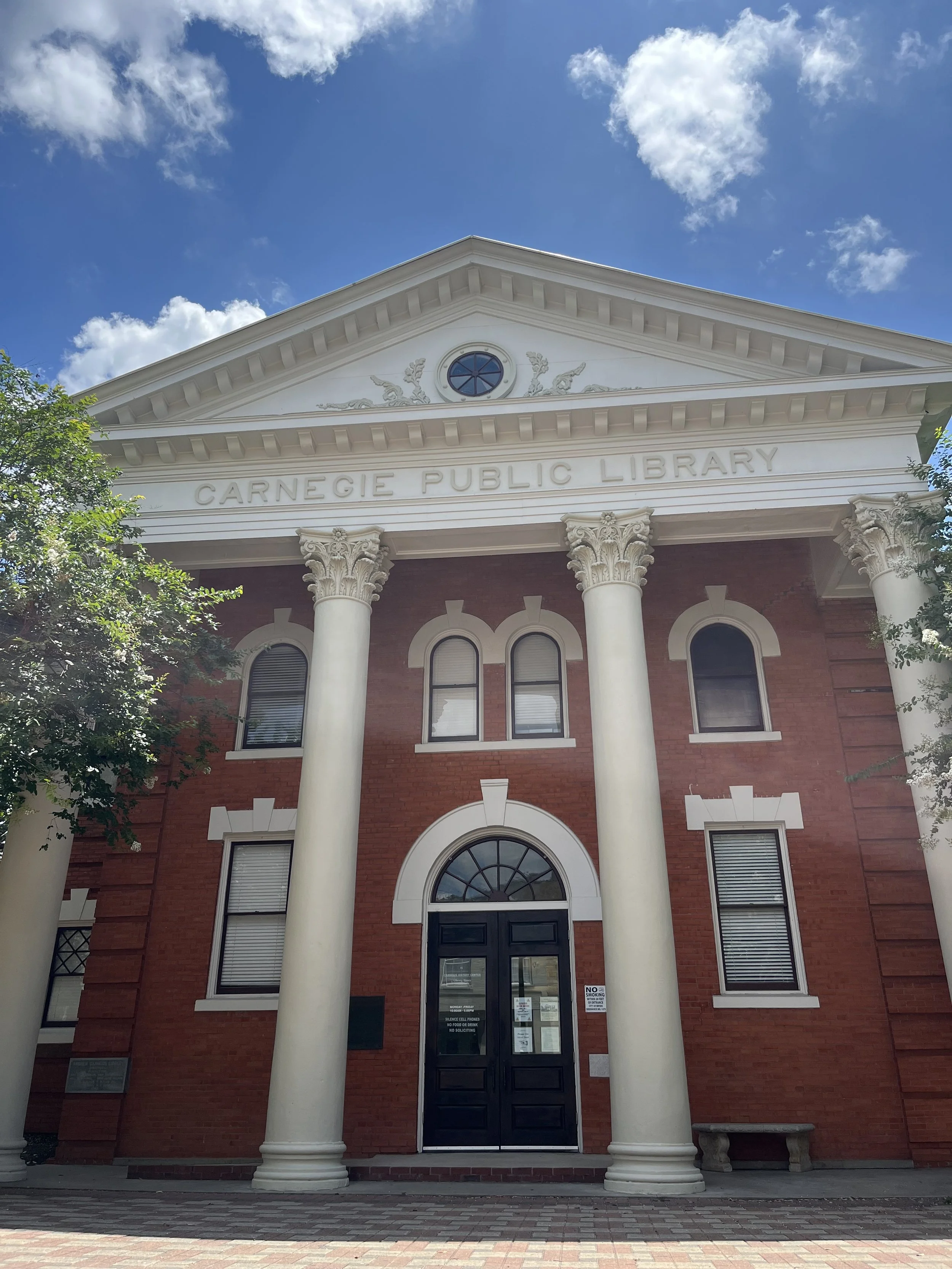
This marker with the inscription “Hood’s Texas Brigade Bryan our last home and this house our last headquarters” marks the location of the meeting hall of the Hood’s Texas Brigade Association from 1919 to 1933.
Hood’s Texas Brigade included the 1st, 4th, and 5th Texas Infantry, the only Texas regiments to fight in the Eastern theatre of the war. When 3,500 men left Texas in 1861, they had no official designation, and straggled to their campgrounds near Richmond, Virginia, in an undisciplined manner, armed with civilian firearms, Bowie knifes, and sixshooters. On October 22, 1861, Brig. Gen. Louis T. Wigfall from the 1st Texas organized these men into the Texas Brigade. Wigfall resigned command of the brigade on February 20, 1862, and on March 2, Hood took command. Similar to how the Union Irish Brigade included non-Irish regiments, Hood’s Texas Brigade saw Georgians and South Carolinian transfers in 1862, and the 3rd Arkansas Infantry by 1863 until the end of the war.
Between 1861 and March of 1862, the brigade garrisoned the Potomac River forts near Dumfries in northern Virginia. Beginning with the Peninsular Campaign, the green troops became battled-hardened veterans, fighting at all major eastern battles including Gaines’ Mills, Second Manassas, Antietam, Gettysburg, Chickamauga, and the Wilderness. At the cornfield of Antietam, the brigade suffered heavy casualty with the 1st Texas having a highest 86%, and earned its reputation as hard fighters. At the Wilderness, General Lee personally led the Texas Brigade in plugging a hole in the line, and cried, “Texans always move them!” A courier in the Texas ranks turned to a comrade and with tears coursing down his cheeks, exclaimed, ‘I would charge hell itself for that old man!”
The marker you see here at the Carnegie Library was dedicated in 1919. Veterans of the Texas Brigade formed the Hood’s Texas Brigade Association in 1872 and held annual reunions at various locations in Texas, twice in Bryan in 1876 and 1902. The library, with a $10,000 grant from Andrew Carnegie, boasted a handsome auditorium, so in 1919, the Hood’s Texas Brigade Association made it their permanent meeting hall. The final meeting happened here in 1933, with only two surviving veterans. Afterwards, the organization dissolved. In 1966, however, the Hood’s Texas Brigade Association was reactivated in Hill College at Hillsboro, Texas, by Col. Harold Simpson, chairman of the Liberal Arts Division at Hill College, Director of the History Complex at Hill College, and Adjunct Professor of History at Texas Christian University. He held B.S., M.A., and M.S. degrees from the University of Illinois and a Ph.D. in history from Texas Christian University. The reactivated Association drew membership from both descendants as regular members and history enthusiasts at large as associate members, and aimed to “honor and perpetuate the memory of the members of Hood's Texas Brigade” from an openly Southern perspective. The association pursues its mission through holding scholarly seminars, doing battlefield tours, preserving monuments, archival materials and objects, and in 2015 gave summer stipends for graduate students in Civil War History.
Further Reading:
If you wish to learn more about Hood’s Texas Brigade through primary sources, I recommend The Campaign from Texas to Maryland by Nicholas A. Davis, Chaplain of the 4th Texas. He published this book in 1863, and included rich details still fresh in his memory. Another great primary source is J.B. Polley’s 1910 book Hood’s Texas Brigade, written during the wave of late nineteenth century regimental history publications.
If you wish to see a more recent scholarly treatment of the Texas Brigade, I recommend Susannah J. Ural’s 2017 book Hood's Texas Brigade in which she explains the motivations of soldiers in the making of this unit’s reputation.
For the history of veteran reunions and memory, I recommend Shae Smith Cox’s 2024 book The Fabric of Civil War Society, in which she discusses how different organizations used reunion events and physical markers to reinforce desired understandings about the war and the veteran’s contemporary society.