Bryan City Cemetery
By Patrick Coan
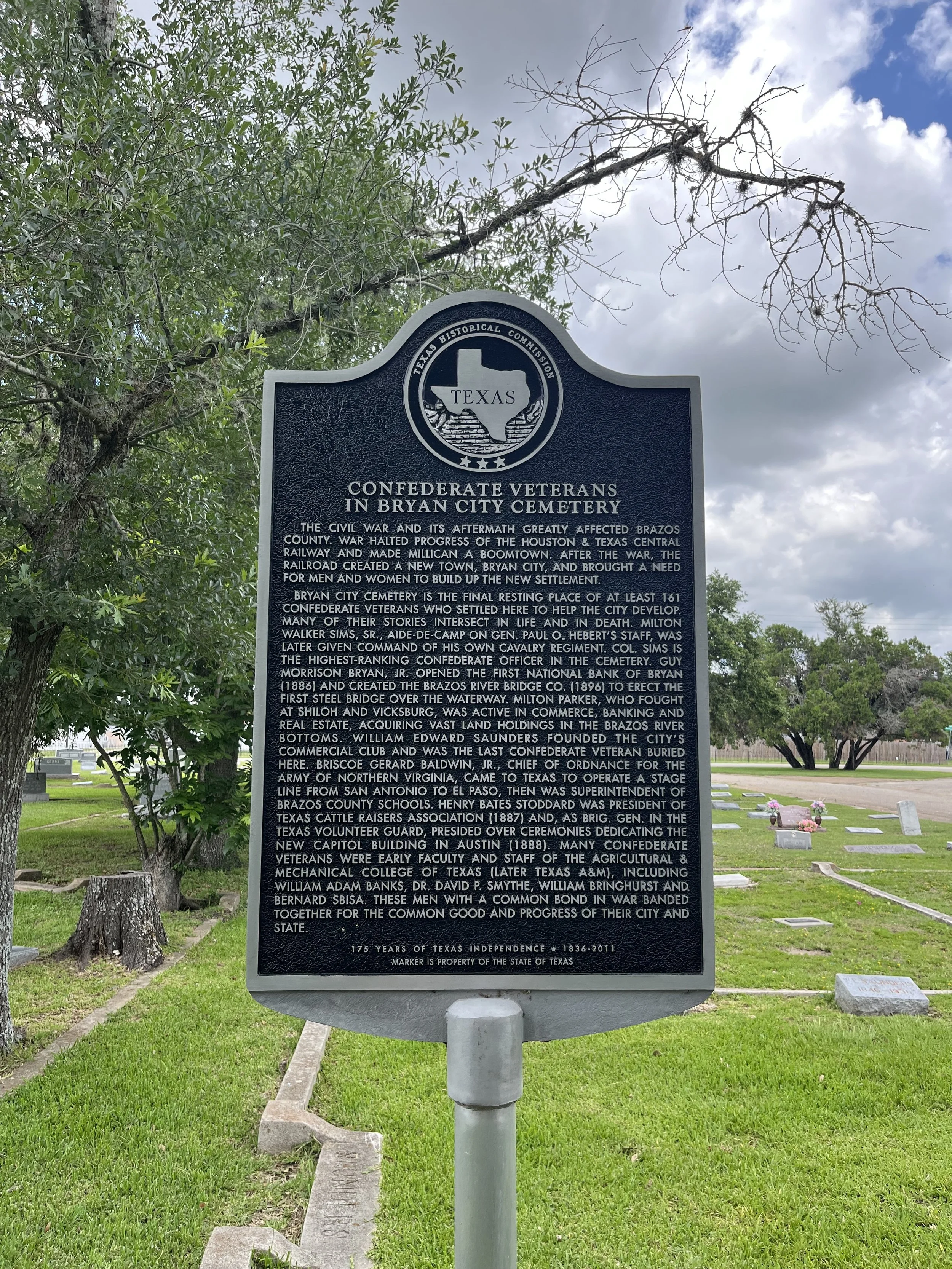
Confederate Graves
Texas was one of 11 Confederate states that fought against the Union during the Civil War. However, it only experienced engagements along its borders, and most of the Texas units fought outside the state. In 1865, the Civil War came to an end when Confederate General Robert E. Lee surrendered to Union General Ulysses S Grant. There were no battles in Brazos County, but the war impacted production on the Houston & Texas Central Railroad. Two years later, the city of Bryan, Texas, was founded after railroad production resumed.
Many Confederate veterans who settled in Bryan after the war contributed to its growth and are buried in Bryan City Cemetery. Some of these veterans, including James Hugh Astin and Milton Parker of the 4th Texas and 2nd Texas Infantry, were severely wounded during their military service. After he moved to Bryan, Astin became a farmer and owned thousands of acres prior to his death from pneumonia on October 29, 1942. Parker became involved in real estate and was a banker prior to his death from apoplexy on December 27, 1906. Other veterans who settled in Bryan, such as Milton Sims Sr. and Briscoe Baldwin Jr. were aides-de-camp and staff officers. Briscoe Baldwin Jr. was specifically a staff officer for Robert E. Lee. After the war, Sims served as a farmer and lawyer in the Bryan community prior to his death on December 3, 1918, from pneumonia. Finally, several Confederate veterans served in city government and as faculty and staff at Texas A&M University. For example, John Washington Tabor was the mayor of Bryan, and William Adams Banks was one of the first professors at Texas A&M. All these men and 155 other Confederate veterans are buried in the Bryan City Cemetery, which was established in 1868 and received a historical marker from the Texas Historical Commission in 2011.
FreedPeople
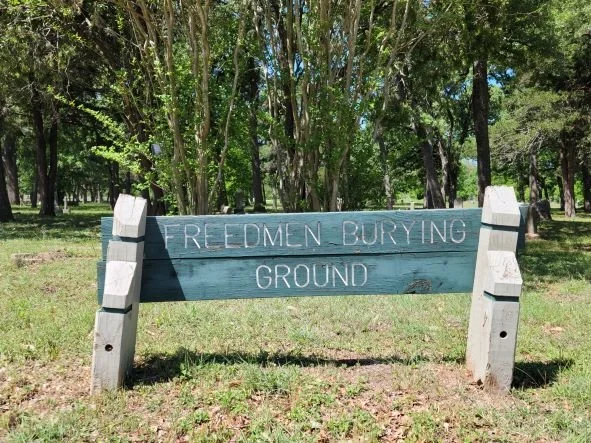
There are also over 1,300 freedmen graves in the Bryan City Cemetery, and the freedmen buried there contributed to the Bryan community as well. Several of these freedmen were born in Texas. For example, Will Vanhook was born in Texas, married his wife in Bryan and had three children, and worked as a painter until his death on May 7, 1917. Sarah Webster was also born in Texas, married her husband in Brazos County, and worked as a laundress until her death on June 5, 1911. Other freedmen who contributed to the Bryan community were born in Mississippi. Henry Byers was born in Mississippi, married his wife in Brazos County, and worked as a farmer until his death on May 4, 1918. Chesterfield Carodine was also born in Mississippi and worked as a farmhand until his death in 1894. Mary Erwin was born in Mississippi and worked as a servant until her death on March 25, 1909. There are many freedmen service members who are buried in the Freedman’s Burying Ground section of the Bryan City Cemetery as well. In 2021, Bryan assessed the graves in this burying ground, but many of the individuals buried there remain unidentified due to unmarked graves and missing records.
Sources and Further Reading:
AncestryLibrary.com
https://www.hmdb.org/m.asp?m=170303.
https://history.brazoscountytx.gov/historic_marker/confederate-veterans-in-bryan-city-cemetery/
McDonald, Archie P. “The Civil War and the Lone Star State: A Brief Overview.” In The Seventh Star of the Confederacy: Texas during the Civil War, edited by Kenneth W. Howell. Denton: University of North Texas Press, 2009.