Millican Massacre
By Jesse Flecha
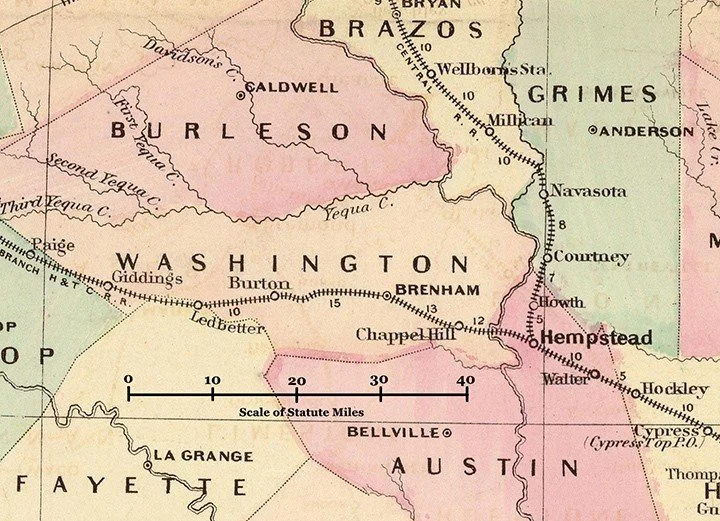
The end of the Civil War did not mean the end of racial violence in the South. “Outrages,” as these acts of racial violence were called, often made headline news across the country. Texas was no exception. In Millican, a chapter of the white supremacist terrorist group, the Ku Klux Klan, committed an atrocity so extensive that it made international news.
Following the surrender of Confederate General Kirby Smith on June 2, 1865, federal troops began establishing their presence in Texas. They soon reached Millican, angering white planters whose wealth and power had evaporated with the Confederacy. Even more infuriating to them was the presence of United States Colored Troops regiments. The Freedmen’s Bureau also established a small presence in Millican, consisting of only one officer and four soldiers. Even this limited federal presence was enough to make many white residents feel threatened and to encourage violence against Black Americans, whom they blamed for their woes.
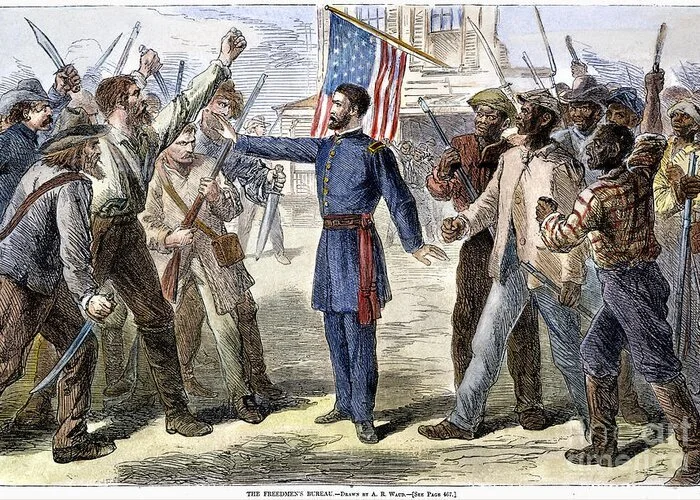
During the state Constitutional Convention of 1868, which many white Texans feared would extend voting rights to African Americans, the Ku Klux Klan began spreading across Texas. On June 7, fifteen Klansmen marched through Millican in a racist demonstration and fired shots at a group of freedpeople. The Klan intended to intimidate Black voters and prevent them from exercising their political rights. Instead, they encountered Pastor George Edwin Brooks. A formerly enslaved man from North Carolina and former Union soldier, Brooks was now a Methodist preacher and Union League organizer. He rallied parishioners to resist the Klan, forcing the Klansmen to flee.
To defend against future attacks, the Black community formed a militia under Brooks’s leadership. Drawing on his military experience, Brooks trained the men, established protective perimeters for women and children, and organized scouts. On July 15, 1868, a rumor spread that Miles Brown, a Black man, had been lynched at a farm owned by the Holliday family, former enslavers. Although it remains unclear whether the lynching occurred, Brooks sent a group of the newly formed Freedmen’s Militia, led by Harry Thomas, to investigate.
Andrew Holliday, a Confederate veteran, reported that his farm was surrounded by armed Black men. Thirty white Millican residents, led by Mayor G.A. Wheat and Deputy Sheriff Patillo, gathered and confronted the militia. Shots were fired, killing several Black militiamen, including Thomas, and wounding many others. These killings marked the beginning of a two-month massacre considered the worst incident of racial violence in Texas during Reconstruction.
Mayor Wheat called on white men throughout Brazos County, and hundreds of volunteers responded. Reports estimated that as many as 70 African Americans were killed, though some estimates reach 150, while as many as 300 were driven from the area. The true number may never be known. Reverend Brooks left for Austin to seek military assistance but was violently murdered; his body was discovered on July 25.
The massacre made headline news across the globe. The New York Times reported on it several times and even featured a statement by Mayor Wheat in one issue. An Austrian newspaper, Freie Presse, sardonically quipped, playing off Davy Crockett’s famous quote, “You may all go to hell, and I will go to Texas,” that “Texas does not seem much better than hell for black people.” Despite the violence, some Black families remained in Brazos County, while others were forced from their homes. The Millican Massacre demonstrates that Reconstruction-era Texas was no different from the rest of the South: white supremacist violence was used systematically to oppress Black Texans and suppress their political and social freedom.
Sources:
https://liberalarts.tamu.edu/blog/millican-massacre-historical-marker/
https://www.hmdb.org/m.asp?m=190131
https://www.tshaonline.org/handbook/entries/brazos-county
https://millican.omeka.net/about
https://dhrace.net/millican/items/show/254
https://explorehere.app/markers/kh7fhtpg48p8hk4v7w9wnh03bs7pkmg3/millican-massacre