Allen African Methodist Episcopal Church
By Joel Criswell
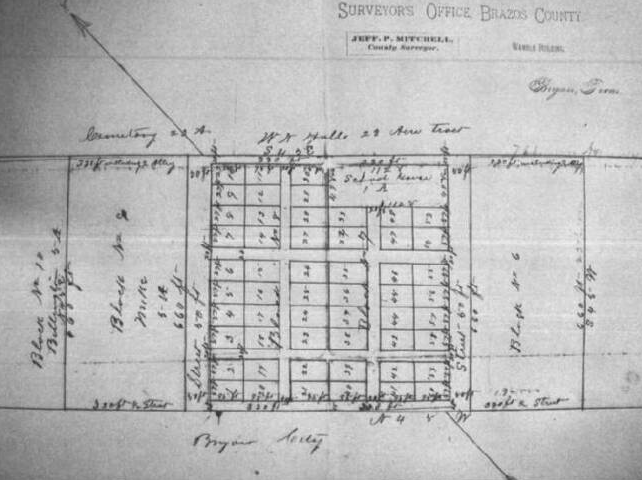
Freedman’s Town, initially called Hall’s Town, formed in the decades following the Civil War. The formerly enslaved were promised freedom. Despite the efforts of Radical Republicans in Congress, local white Southerners, particularly so-called Redeemer Democrats, worked to maintain racial hierarchy. White violence drove African Americans from nearby towns like Millican, Texas, to the nascent settlement, which at the time was on the outskirts of Bryan, Texas. Hannible R. Hall defied the stigma against selling land to African Americans as early as 1866 when he began selling tracts of land near the town of Bryan, Texas, for as little as $12.50, a month’s wage for many African American laborers. The Houston and Texas Central Railroad (H&TC) then began selling quitclaim deeds to former slaves along Hall’s Town.
The Black settlers of Freedman’s Town built and sustained a community that remained under attack from Redeemer Democrats. Redeemer Democrats would often falsely accuse prominent Black leaders of crimes. Even if acquitted, they would be ruined by legal fees. Reverend Emmanuel Hammitt founded the first African American church in Brazos County, the Allen African Methodist Episcopal Church (AME), named after Richard Allen, a former slave who founded the first AME church in Philadelphia in 1787. Charles B. Foster would replace Hammitt as pastor but was forced to flee Freedman’s Town after being victimized by the likely false accusation of bigamy. The Allen AME Church remains and has long contributed to social and advocacy causes. Its continued existence speaks to Freedman’s Town’s resilience in the face of persecution.
Sources and Further Reading
Further Reading:
https://history.brazoscountytx.gov/historic_marker/allen-chapel-a-m-e-church/
Dale Baum, “Burdens of Landholding in a Freed Slave Settlement: The Case of Brazos County's “Hall’s” Town.”